
Space Robotics
Distributed control of
satellites in formation
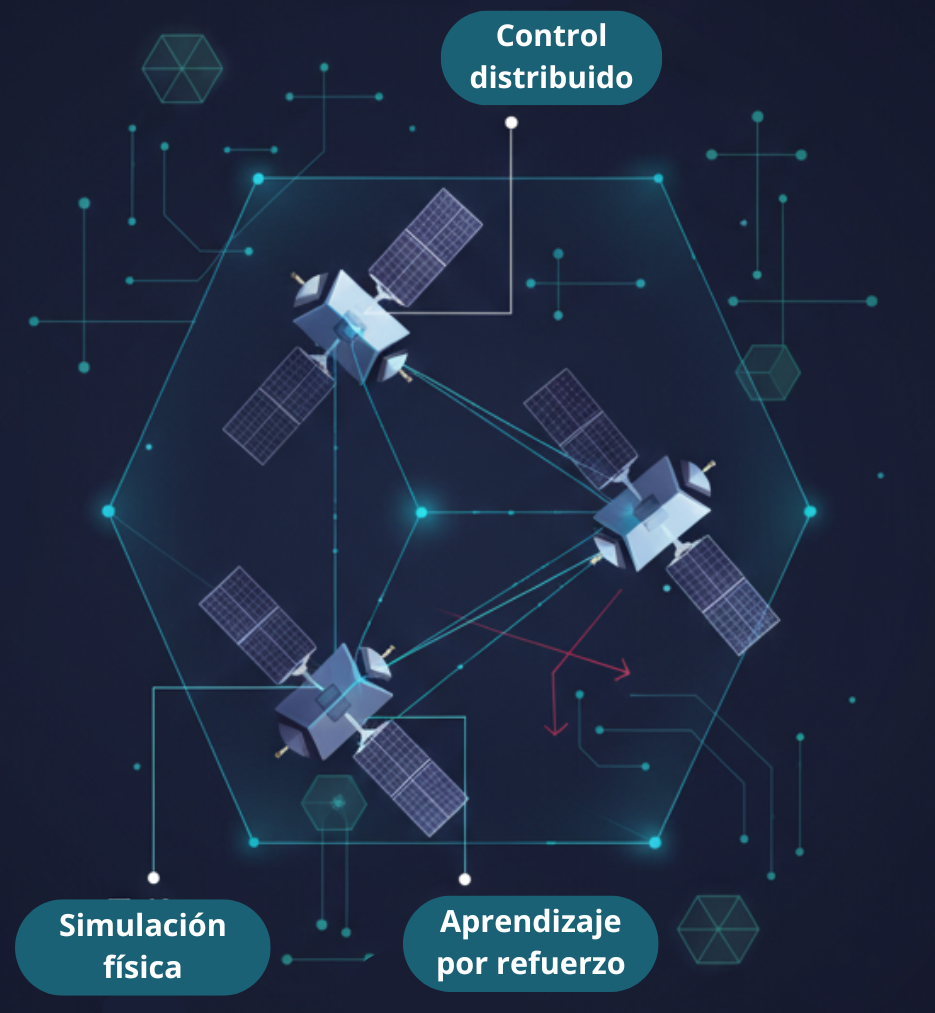
A multi-agent reinforcement learning system that maintains stable orbital formations under real perturbations — without centralised control. The dynamics of each unit are physically validated on a Lite6 manipulator.
01 · The system
Satellites that learn to coordinate with each other
A custom simulation environment where each satellite is a cooperative agent capable of maintaining a formation, reconfiguring it and recovering from perturbations — without relying on a central node to coordinate the rest.
02 · Objectives
From orbital theory to physical validation
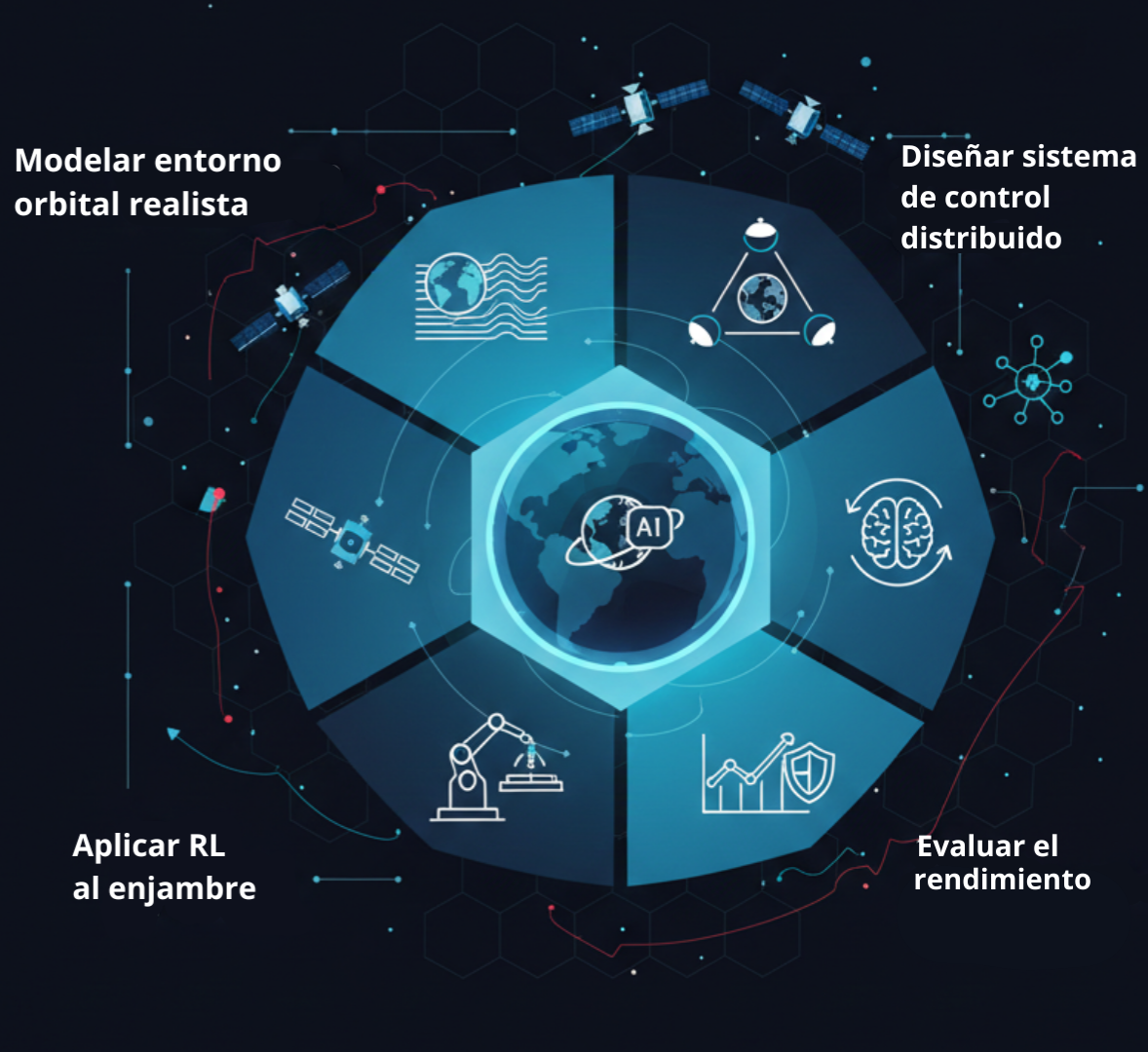
Modelling a realistic orbital environment, designing distributed control, applying multi-agent RL, validating the system on a physical platform and measuring its stability under perturbations.
03 · Why it matters
Autonomy is the next step
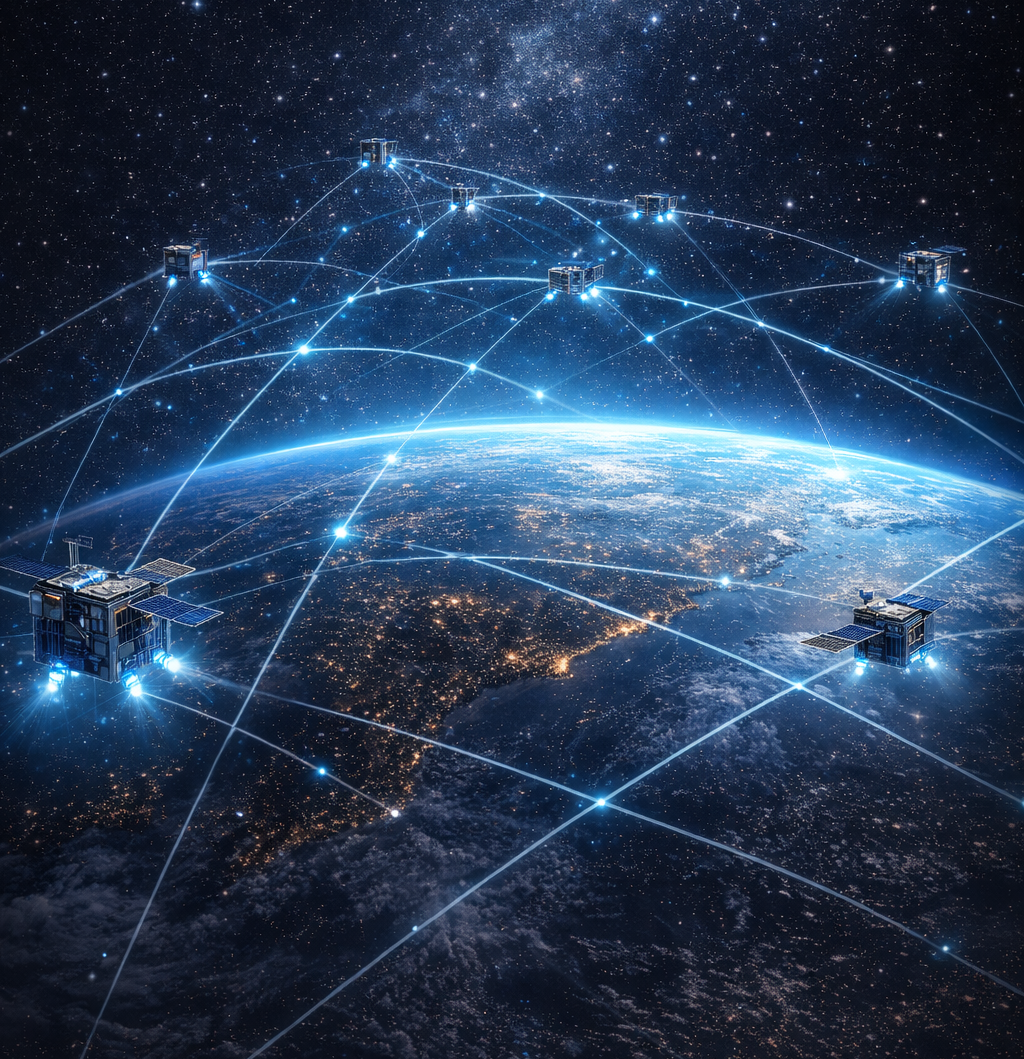
Future missions will depend on autonomous constellations and swarms. This is the problem we address: endowing multi-agent systems with greater autonomy, efficiency and resilience in complex operations.
04 · Applications
One principle, multiple sectors
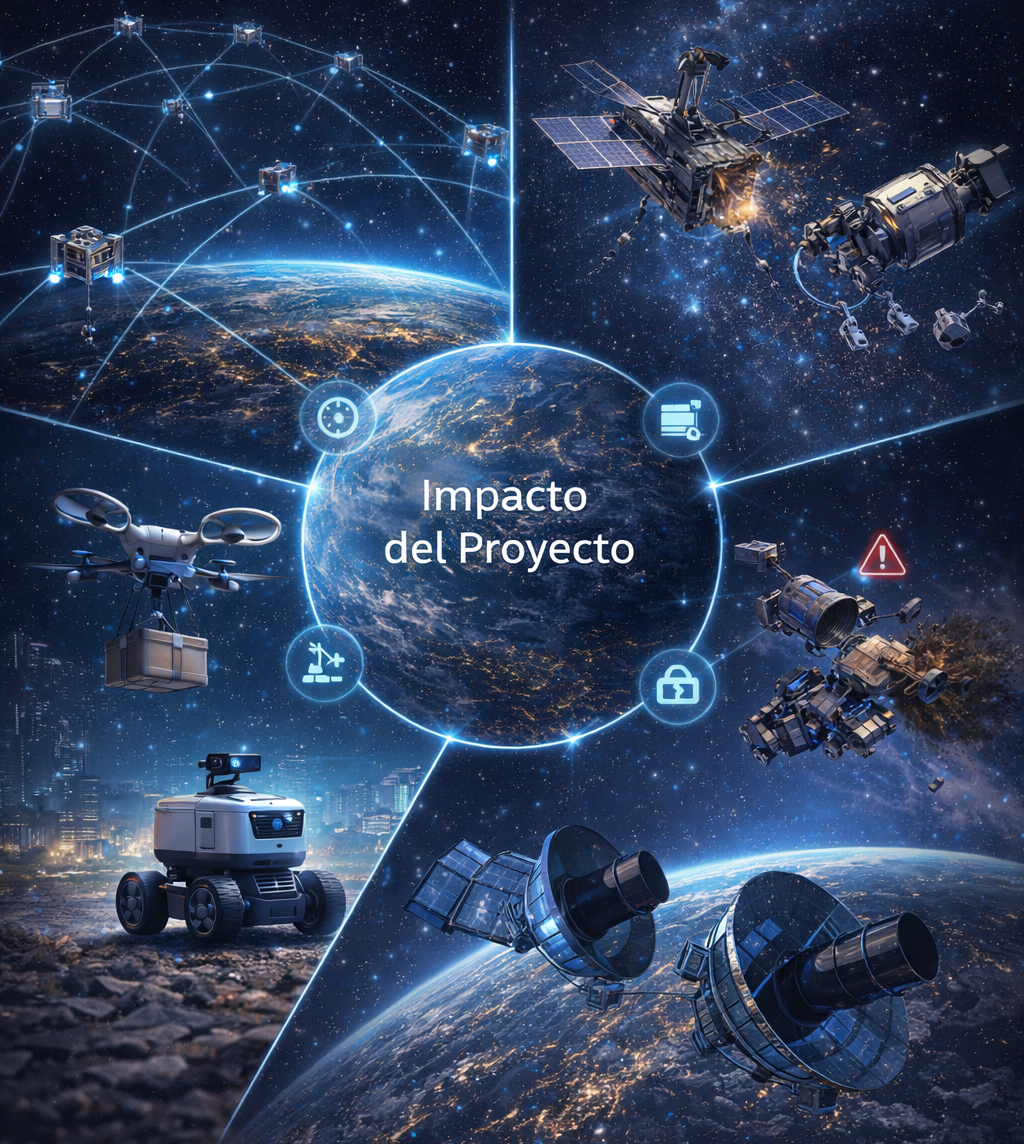
The results of this system are applicable to intelligent constellations, autonomous inspection, space surveillance, distributed scientific missions and ground-based technologies built on multi-agent control.
Development log
Project timeline and progress
This section represents the project timeline through a visual simulation: each cube symbolises a robot and a month of work, connected like satellites in formation to reflect the physical validation of the experiments.
Does your operation depend on coordinating multiple autonomous units?
The distributed control developed in this project is transferable to constellations, drone fleets, mobile robotics and any multi-agent system. Let's talk about your case.
Talk about your project